Read the full article to gain deeper insights and comprehensive information.

Dec 17, 2025
0
Launch your own Namkeen (savory snacks) production business with support from StartupHyper and government aid up to ₹2 lakh. Learn about required machines, raw materials, total investment, profit margins, and how this food business works in both rural and urban areas.
The Indian Namkeen and Bhujiya (savory snack) market is booming, with high demand during festivals and everyday snacking. Snacks like sev, bhujiya, and nimki are loved across the country, and even exported abroad. This makes namkeen production an attractive small-scale industry. With the right machines and support, even a home-based entrepreneur can set up a profitable unit. StartupHyper – a leading Bihar-based food machinery supplier – offers all the essential equipment and guidance to help you launch your snack business under schemes like MMUY.
An example of a snack production line with mixing and frying machines. Modern machinery can automate sev/bhujiya extrusion, frying, and packaging, saving labor and ensuring hygiene.
To produce Namkeen efficiently, you need a set of specialized machines:

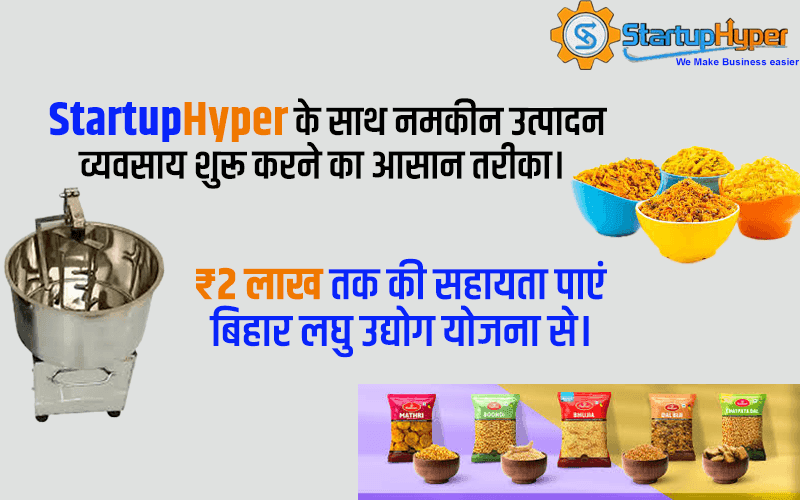
Besan Mixer (Malli) Machine: Also called a dough kneader, this machine mixes gram flour (besan) with spices, water, and oil into a uniform dough. For example, a 10–20 kg capacity besan mixer uses stainless-steel paddles to knead the dough. This ensures smooth, well-mixed dough ready for extrusion.
Packaging Machine (Band Sealer): After seasoning, snacks are packed in heat-sealable pouches. A semi-automatic band sealer (tabletop conveyor) is used to seal plastic bags. The operator places a filled pouch on the conveyor, and the sealer uses heat and pressure to create an airtight seal. This ensures hygienic, leak-proof packaging.
All these machines are built of food-grade stainless steel for hygiene and durability. Modern Namkeen machines minimize manual labor, are easy to operate, and require little maintenance. Together, they automate the key steps of kneading, extruding, frying, de-oiling, and packing, enabling high-quality, consistent snacks.
The basic production process is as follows (using the above machines):
This streamlined flow – knead, extrude/sheet, fry, de-oil, season, and pack – can be run continuously for large batches. For example, Jas Enterprise notes that the dough is extruded and fried, then “placed into the oil extractor to remove excess oil” as a final step.
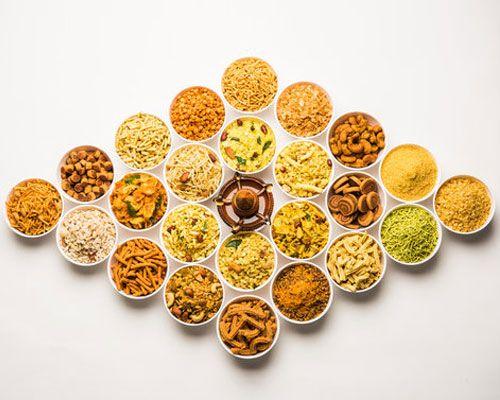
Typical raw ingredients for namkeen include:
Using quality ingredients is important. besan should be fresh and free of lumps. Hygienic oil and clean water ensure a good product.
Entrepreneurs, foodies, and local kitchens can start a Namkeen line. Even home-based food processors or small eateries can expand into packaged snacks. The investment is moderate, so many first-time business owners, women entrepreneurs, and youth entering food processing find it accessible.
Namkeen demand is strong year-round, with seasonal peaks during festivals like Diwali, Holi and Navratri. It also sells well at fairs, tea shops, and as accompanying dishes in meals. As Blaze Machinery notes, Namkeen is a “very popular and essential” snack for Indian households. Culturally, it is a go-to munching item for tea-time and travel, meaning steady sales throughout the year.
Small snack entrepreneurs often start with local markets and expand as they build brand recognition. Government schemes (like Bihar’s MMUY) and lower barrier to entry (mostly small capital and space) make it attractive for new entrants. With proper planning, even a 500–1000 sq.ft. unit can produce enough to serve local retailers and wholesale buyers.
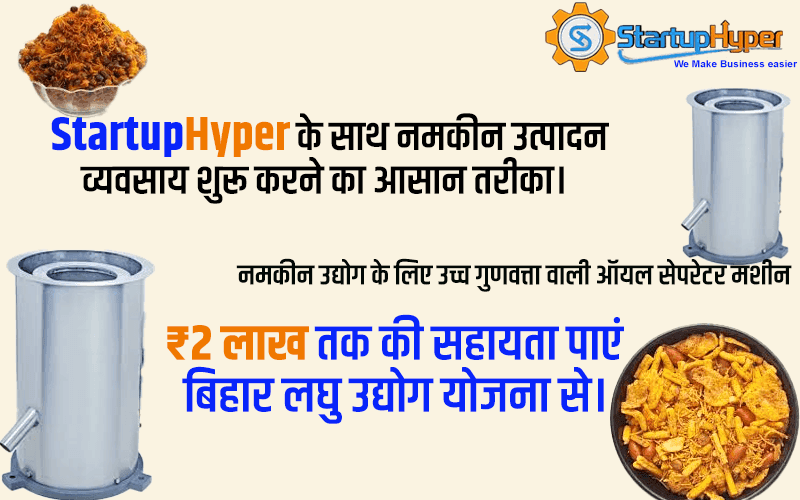
Initial Investment: The main cost is the machinery. According to a recent project report, a basic namkeen production line (as above) costs about ₹1.78 lakh for machines, plus around ₹0.02 lakh working capital (raw materials) – roughly ₹2 lakh total. This includes the Bhujiya extruder (₹25k), besan mixer (₹28k), nimki machine (₹80k), oil separator (₹20k), band sealer (₹15k), Kadhai (₹4k) and stove (₹6k). These figures are indicative; exact prices vary by maker and scale. StartupHyper can supply similar equipment packages and help secure loans/subsidies under schemes like MMUY or PMEGP.
Running Costs: Main recurring costs are raw ingredients (besan, spices, oil), packaging, fuel/electricity, and labor. If you produce around 50–200 kg of snacks per day, raw material costs might be ₹50–60 per kg.
Profit Margin: Namkeen businesses typically enjoy 20–30% profit margins. For example, if production cost is ₹55/kg and wholesale selling price is ₹80/kg, profit is about ₹25/kg. A Blaze Machinery case study reports an initial margin of ₹10–20 per kg, meaning even small batches yield steady profit. As you scale and brand your product, margins can rise by direct retailing or packaged sales.
Revenue Example: Suppose a semi-auto setup makes 200 kg per day and sells at ₹80/kg. After costs (₹55/kg), the net is ₹25×200 = ₹5,000/day (roughly ₹1.25 lakh per month, 25 working days). At that rate, a ₹10.3 lakh total investment (including space and other costs) could be recovered in about 8–10 months. Even with our smaller ₹2L machine investment, breakeven can occur within months if sales are consistent and overheads are low.
Key Points: High-volume and efficient machines reduce per-unit cost. Quality packaging (with your branding) can allow higher retail pricing. Proper marketing (local shops, online marketplaces) expands reach. Profit increases with scale and reputation. StartupHyper can assist with a custom project report to estimate your exact costs and revenues.

StartupHyper is your partner for launching a snack business. We specialize in selling and servicing food processing machines in Bihar and Eastern India. Our services include:
As StartupHyper’s blogs show, professional setup and guidance can turn a small investment into a “crunchy, profitable reality”. We’ve helped many entrepreneurs (cornflakes, honey, makhana processing, etc.) start successful ventures under ₹2–10 lakh. Now, you can do the same with namkeen production using StartupHyper expertise and machinery.
In summary, setting up a small namkeen (bhujiya, nimki, etc.) production unit involves known machinery and processes. By investing in the right equipment – a bhujia extruder, mixer (malli), nimki sheeter, oil separator, and packager – you automate most of the work and ensure consistent quality. Raw materials are affordable and widely available, and the market demand is strong year-round. Profit margins of 20–30% are realistic, meaning even a modest operation can earn back its capital in under a year. With our government’s subsidies and StartupHyper support, the initial investment barrier is low.
Ready to begin? Contact StartupHyper today to get a free consultation. We’ll help you choose the right machines and plan your namkeen business – so you can start frying, packaging, and profiting from India’s favorite crunchy snacks!
Stay updated with the latest tips, trends, and best practices in factory setup and machinery procurement—subscribe to the StartupHyper newsletter!
No spam, we promise. Your inbox is safe with us—only valuable insights.