Read the full article to gain deeper insights and comprehensive information.

Nov 07, 2026
0
Learn how to start a vegetable powder manufacturing business in India. Explore raw materials, machinery, manufacturing processes, investment factors and marketing opportunities.
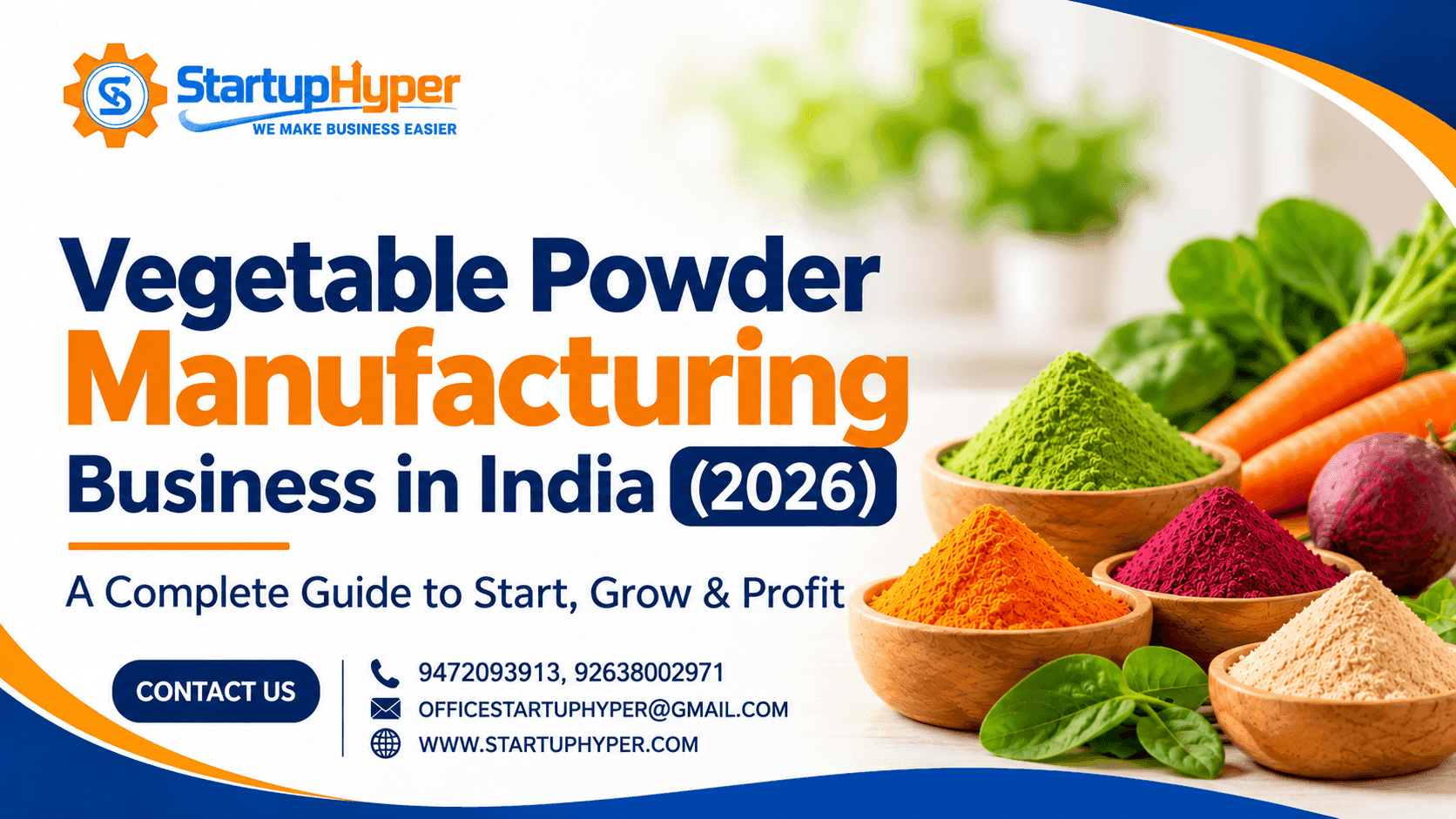
Vegetable powder manufacturing is an emerging opportunity in the food-processing industry. With applications in packaged foods, soups, sauces, seasonings and ready-to-cook products, vegetable powders are becoming useful ingredients for food manufacturers and commercial kitchens.
These powders are produced by removing moisture from fresh vegetables and converting them into fine powder. Entrepreneurs can start with products like tomato powder, onion powder, garlic powder, spinach powder and beetroot powder.
Let's understand the machinery, manufacturing process and basic requirements for starting this business.
You can manufacture different varieties depending on raw material availability and market demand.
- Tomato Powder: Used in soups, sauces and seasoning mixes.
- Onion Powder: Used in spice blends, snacks and packaged foods.
- Garlic Powder: Used in seasonings, sauces and instant food products.
- Spinach Powder: Used in pasta, soups and selected bakery products.
**- Beetroot Powder: **Used in beverages, bakery products and food formulations.
- Carrot Powder: Used in soups, instant mixes and food products.
Starting with one or two products can help you understand the production process and market requirements.
The main raw materials include:
Fresh vegetables such as tomato, onion, garlic, spinach and beetroot.
Clean water for washing.
Food-grade processing materials, wherever required.
Food-grade packaging pouches.
Fresh, good-quality vegetables are important for maintaining the colour, flavour and quality of the final powder.
A vegetable powder manufacturing unit requires suitable food-processing machinery.
| Machine | Purpose |
|---|---|
| Vegetable Washing Machine | Removes dirt and impurities |
| Peeling & Cutting Machine | Prepares vegetables for drying |
| Blanching Machine | Pre-treats selected vegetables |
| Tray Dryer / Dehydrator | Removes moisture |
| Pulverizer | Converts dried vegetables into powder |
| Vibro Sifter | Ensures uniform powder size |
| Packaging Machine | Packs and seals the final product |
The machinery selection depends on the vegetable type, production capacity and level of automation.
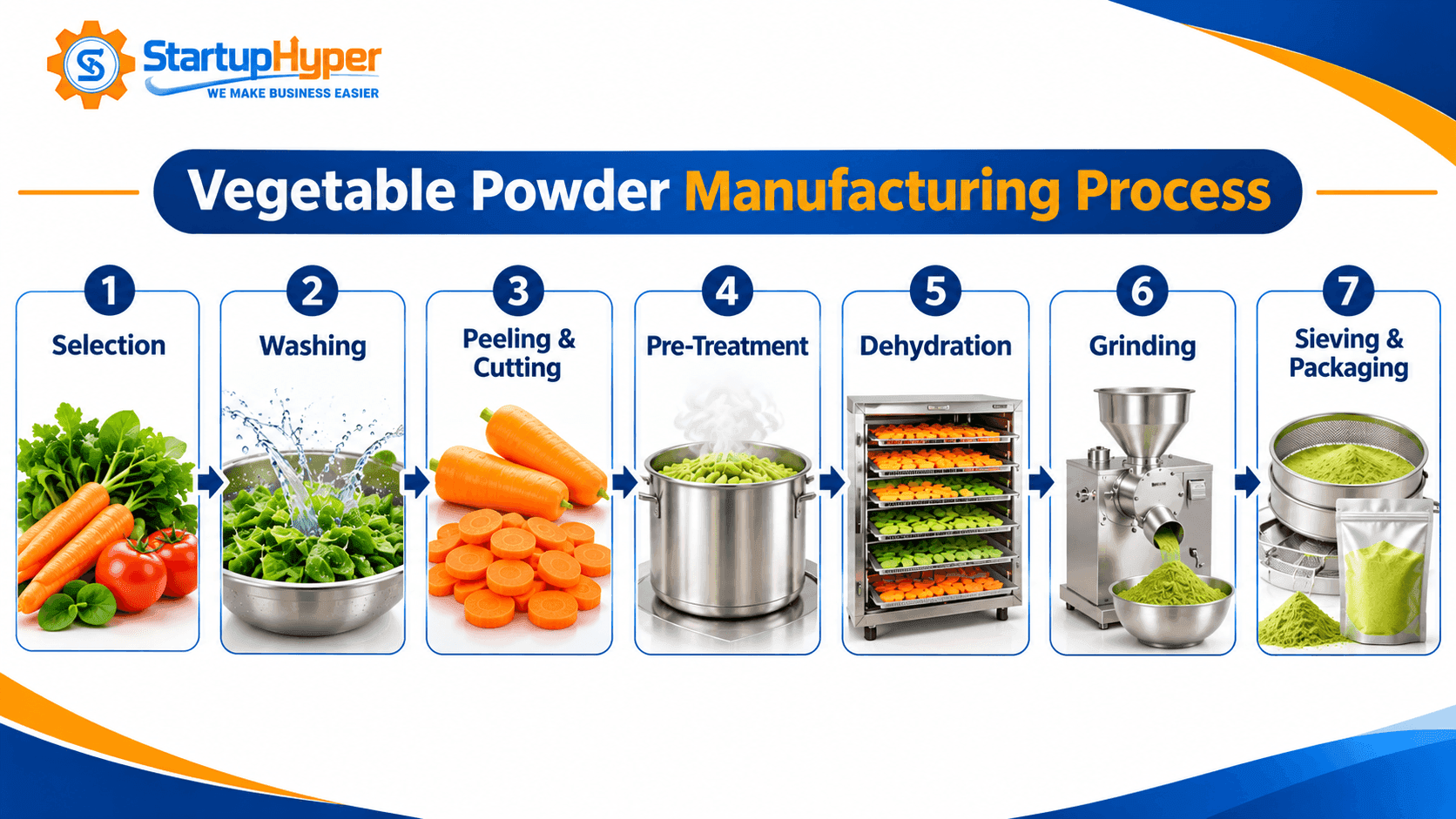
The manufacturing process involves the following steps:
Step 1: Selection: Fresh vegetables are selected and graded.
Step 2: Washing: Vegetables are thoroughly cleaned to remove dirt and impurities.
Step 3: Peeling & Cutting: Unwanted parts are removed, and vegetables are cut into uniform slices.
Step 4: Pre-Treatment: Certain vegetables undergo blanching before drying.
Step 5: Dehydration: Vegetables are dried using a suitable tray dryer or dehydrator to remove moisture.
Step 6: Grinding: The dried vegetables are processed in a pulverizer to obtain fine powder.
Step 7: Sieving & Packaging: The powder is sieved, quality-checked and packed in moisture-resistant packaging.
The investment depends on production capacity, machinery, factory space and automation.
Major expenses include:
Machinery and installation
Land or factory rent
Raw materials
Electricity and water
Labour
Packaging and transportation
Working capital
A small-scale unit can begin with a basic processing setup. However, entrepreneurs should obtain machinery quotations and prepare a project report before deciding the total investment.
Before starting production, entrepreneurs should check the following requirements:
FSSAI Registration/Licence: Required as applicable for food manufacturing.
Udyam Registration: For eligible MSME businesses.
GST Registration: As applicable under GST regulations.
Trade Licence: As required by local authorities.
Factory and Pollution Approvals: Depending on the manufacturing setup and applicable regulations.
Food packaging and labelling must also follow applicable FSSAI standards
Vegetable powders have applications across several industries:
Packaged food manufacturing companies
Restaurants and hotels
Spice and seasoning manufacturers
Soup and sauce manufacturers
Ready-to-cook food brands
Bakery and food ingredient suppliers
You can sell through B2B distributors, wholesale buyers, food manufacturers and online marketplaces.
Before starting large-scale production, identify potential buyers and understand their product specifications and requirements.
Choosing the right machinery is an important step when establishing a food-processing business.
StartupHyper helps entrepreneurs explore machinery solutions for different manufacturing and food-processing requirements.
Whether you are planning a small-scale vegetable processing unit or a larger powder manufacturing setup, selecting suitable machinery according to your production needs is essential.
Looking for machinery for your manufacturing business?
Explore available machinery solutions at https://www.machinehai.com/ and take the first step towards your manufacturing journey.
Tomatoes, onions, garlic, spinach, beetroot and carrots are commonly used for vegetable powder production.
A tray dryer or vegetable dehydrator is essential for removing moisture before grinding.
Yes. Entrepreneurs can start with a suitable small-scale processing setup and expand according to production requirements.
They are used in soups, sauces, spice mixes, snacks, bakery products and ready-to-cook foods.
Yes. The appropriate FSSAI registration or licence is required for operating a food manufacturing business.
Vegetable powder manufacturing offers an opportunity to convert fresh agricultural produce into value-added food ingredients. With suitable machinery, quality raw materials and proper market research, entrepreneurs can explore this segment of the food-processing industry.
📞Call / WhatsApp: 9472093913
📧Email: info@startuphyper.com
🌐 Website: www.startuphyper.com | www.machinehai.com
🏢 Branches: Patna | Gaya | Katihar | Saharsa
Nov 04, 2026
Stay updated with the latest tips, trends, and best practices in factory setup and machinery procurement—subscribe to the StartupHyper newsletter!
No spam, we promise. Your inbox is safe with us—only valuable insights.