Read the full article to gain deeper insights and comprehensive information.

Nov 10, 2026
0
Egg tray making machine price in India, how egg trays are made, and the raw material needed. A simple guide before you set up a unit in Bihar.
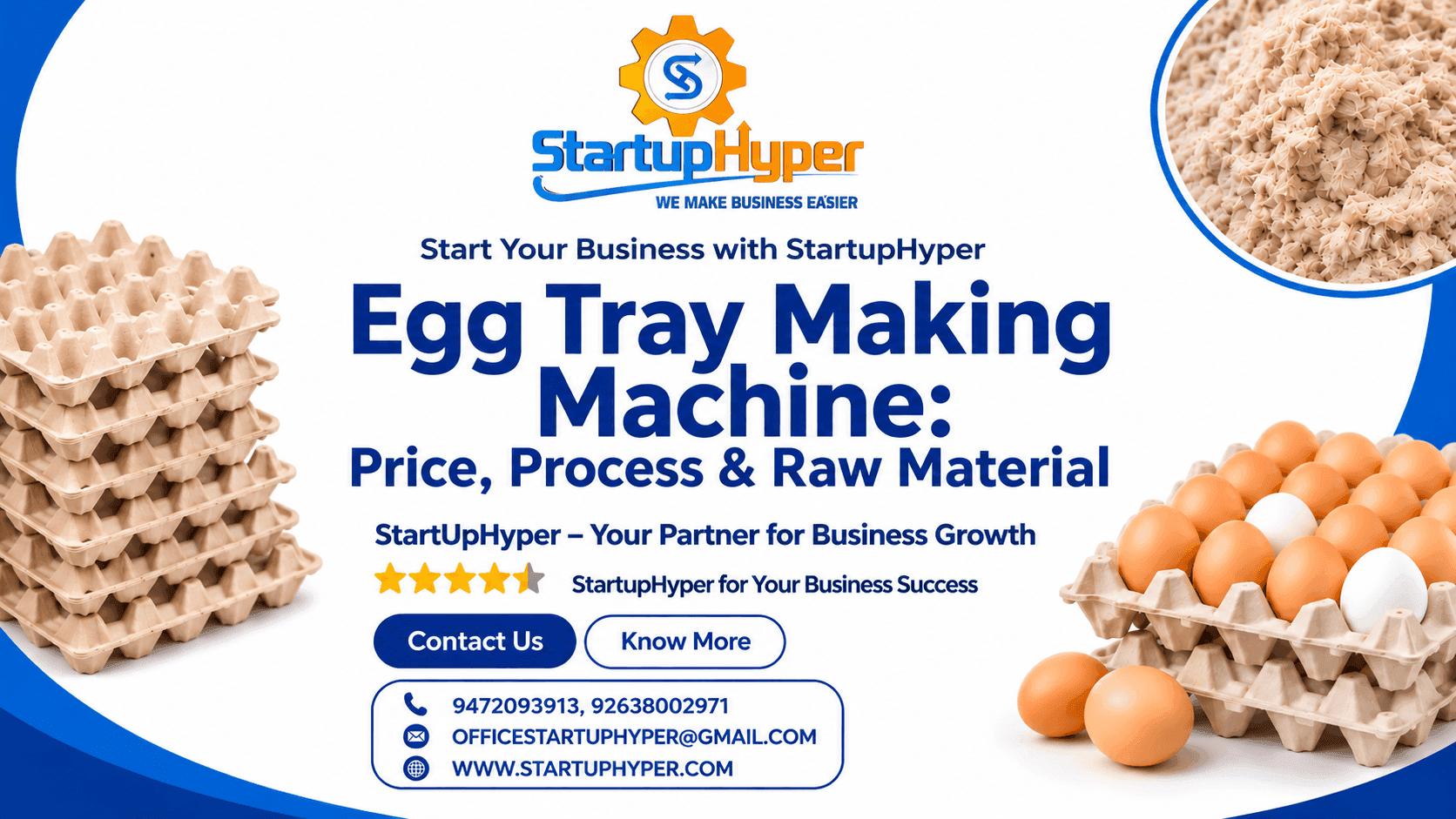
An egg tray making machine turns waste paper into moulded pulp trays used to pack and carry eggs. If you are thinking of starting this business in Bihar or anywhere in India, you first need to know three things: what the machine costs, how the process works, and what raw material you need. This guide covers all three in simple terms.
It is a set of machines, not one single machine. The MSME description of this industry says the process covers collection of waste paper, pulping to form slurry, molding into tray shapes using molds, drying, quality inspection, and packaging. So a typical plant has a pulper, a moulding machine, a drying system and a packing area.
Machines come in different sizes. Manufacturer websites list models from 2,500 to 9,000 pieces per hour for fully automatic lines. Smaller semi-automatic machines from Indian makers are listed at around 1,500-1,800 trays per hour and even lower.
The price depends mainly on output, automation and the drying system, and listed prices vary a lot. Even for machines with the same listed capacity, the gap can be big. One Indian supplier lists 1,600 tray/hour semi-automatic machines at prices from ₹1.5 lakh to ₹15 lakh. So a low price on a listing does not tell you what is actually included.
| Type of Machine | Output / Capacity | Price |
|---|---|---|
| Small Semi-Automatic (Indian Makers) | 700–1,800 trays/hour | ₹1.5 lakh – ₹15 lakh |
| Large Automatic Line (Indian Makers) | Around 2,500 trays/hour | Around ₹35 lakh |
| Small Imported Machines (China) | Varies | US$5,000 – US$18,000 (FOB) |
| Full Imported Production Lines | Varies | US$150,000 – US$220,000 (FOB) |
Do not budget only for the machine. You also need a shed, a power connection, water, and working capital for waste paper. Always ask for a written quotation that lists exactly what is included.
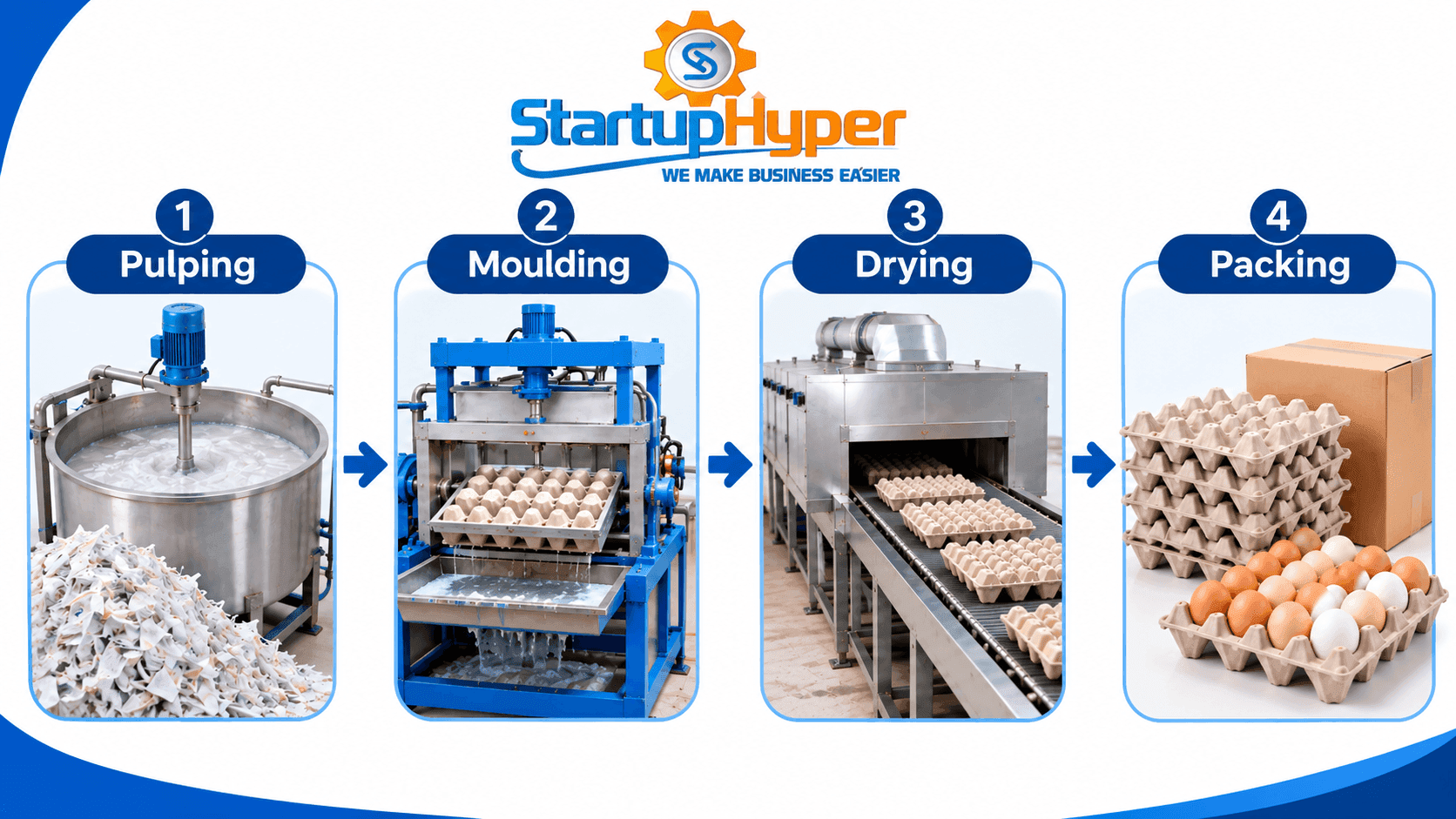
The process has four steps: pulping, moulding, drying and packing.
1. Pulping : Waste paper is put in a pulper with water. One manufacturer says the paper turns into pulp after about 20 minutes in a hydraulic pulper. The same source recommends a paper-to-water ratio of 1:5 to 1:6.
2. Moulding : The pulp goes to the forming machine, where moulds shape it into trays. A research paper on a small egg tray machine describes a suction-based process with a pulp slurry consistency of about 5%.
3. Drying : Wet trays must be dried fully. Sun drying is the cheapest option, but it takes a very long time and uneven drying can affect quality. Machine drying is faster. For one automatic model, the manufacturer states a drying time of about 15 to 20 minutes in a metal drying line. Drying lines run on fuel such as gas, LPG or diesel, so this is a running cost you must plan for.
4. Packing : Trays are counted, stacked and bundled for sale.
Waste paper is the main raw material. Commonly used types are cardboard, cartons, kraft paper, waste books, magazines and newspapers.
Raw material is also the biggest running cost. One industry page says waste paper is about 50 to 60% of operating expenses in an egg tray plant. As a sample figure from one manufacturer, a 2,500 to 3,000 pieces/hour model is listed with paper consumption of 200 kg/h and water of 440 kg/h. Your actual numbers will depend on the machine and tray weight.
Water is the second raw material, and it is easy to forget. Check your water supply before choosing a site.
Waste paper supply: Find out how much paper you can get nearby every month, and at what rate. Rates change by season and by location.
Power: Check the connected load of the machine and whether your site can support it.
Drying method: Decide between sun drying and a fuel-based dryer, and add that cost to your plan.
Buyers: Talk to poultry farms and egg traders in your area first. Know the tray size they use and the price they pay.
Quotation: Get it in writing, with what is included, delivery, installation, training and warranty.
Visit a running unit: If you can, see a similar machine working before you pay.
It can be, but it depends on your local numbers, so work them out before you invest. Waste paper rate, power and fuel cost, labour, and the price your local buyers pay for trays decide your margin. Any ready-made profit figure from the internet will not match your situation. Do the calculation with your own quotes.

Buying the machine is only one part of setting up a factory. StartupHyper works with entrepreneurs in Bihar who are planning manufacturing units, and we can help you with the steps that usually cause delays or wrong decisions.
Choosing the right machine: Understanding which output and automation level fits your budget and your local demand, so you don’t overspend or under-buy.
Comparing supplier quotations: Checking what is included in each quote (pulper, dryer, moulds, installation) so you can compare like with like.
Machinery procurement support: Guidance on sourcing machines from Indian and overseas suppliers, and what to ask before you pay.
Factory setup planning: Shed, power, water, drying arrangement and layout for your site in Bihar.
Raw material planning: Working out where your waste paper will come from and how much you will need each month.
Market check: Talking to local buyers such as poultry farms and egg traders before you commit.
Planning to start? Talk to the StartupHyper team before you finalise a machine. WhatsApp: 9472093913
Listed prices range from about ₹1.5 lakh for small semi-automatic machines to around ₹35 lakh for larger automatic ones, and the gap is wide even for similar capacity. Always get a written quotation that lists what is included.
Waste paper is the main raw material, such as cartons, cardboard, kraft paper, old books and newspapers. Water is also needed to make the pulp.
It depends on the machine. Small semi-automatic machines from Indian makers are listed at roughly 700 to 1,800 trays per hour, and manufacturer websites list larger automatic lines from 2,500 up to 9,000 pieces per hour.
Semi-automatic costs less to start, but it needs more labour and gives lower output. Automatic gives higher output but needs more capital, so choose after you have confirmed your demand.
Trays are either sun-dried or dried in a machine drying line. Sun drying is cheaper but slow and depends on weather, and machine drying is faster but adds a fuel cost.
Many pulp moulding machines can make other trays, such as fruit and coffee cup trays, by changing the moulds. Confirm this with the supplier for the specific machine.
Yes, it can be set up in Bihar, but your plan should depend on local waste paper supply, power, water and buyers. Check these before buying a machine.
Check what the quotation includes, the power load, the drying method, warranty and installation support, and see a similar machine running if possible. Also confirm who will buy your trays and at what price.
📞Call / WhatsApp: 9472093913
📧Email: info@startuphyper.com
🌐 Website: www.startuphyper.com | www.machinehai.com
🏢 Branches: Patna | Gaya | Katihar | Saharsa

Nov 04, 2026
Stay updated with the latest tips, trends, and best practices in factory setup and machinery procurement—subscribe to the StartupHyper newsletter!
No spam, we promise. Your inbox is safe with us—only valuable insights.