Read the full article to gain deeper insights and comprehensive information.

Nov 13, 2026
0
Learn how to start a murmura manufacturing business in India. Explore investment, raw materials, machinery, production process, licences and marketing opportunities.

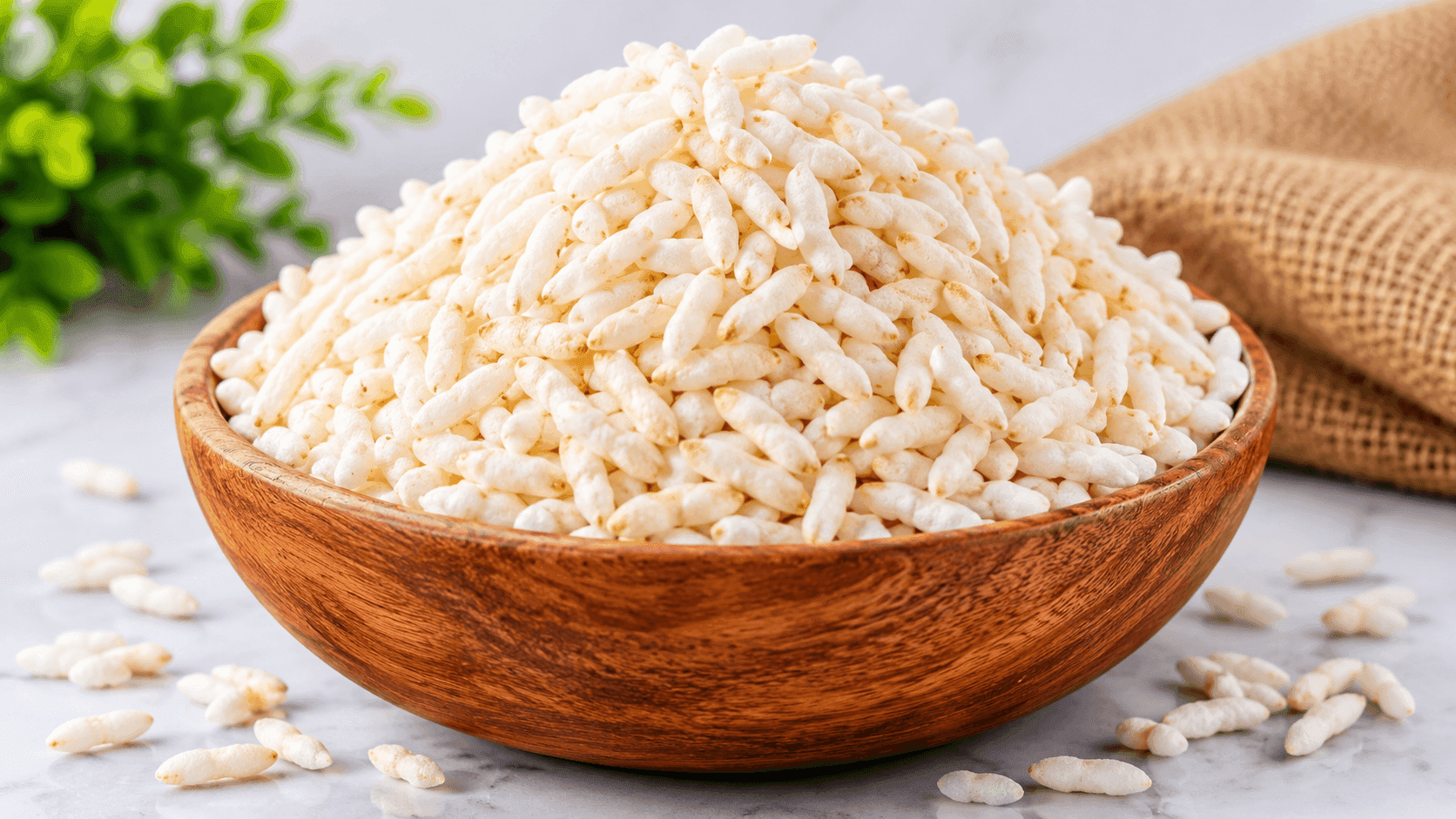
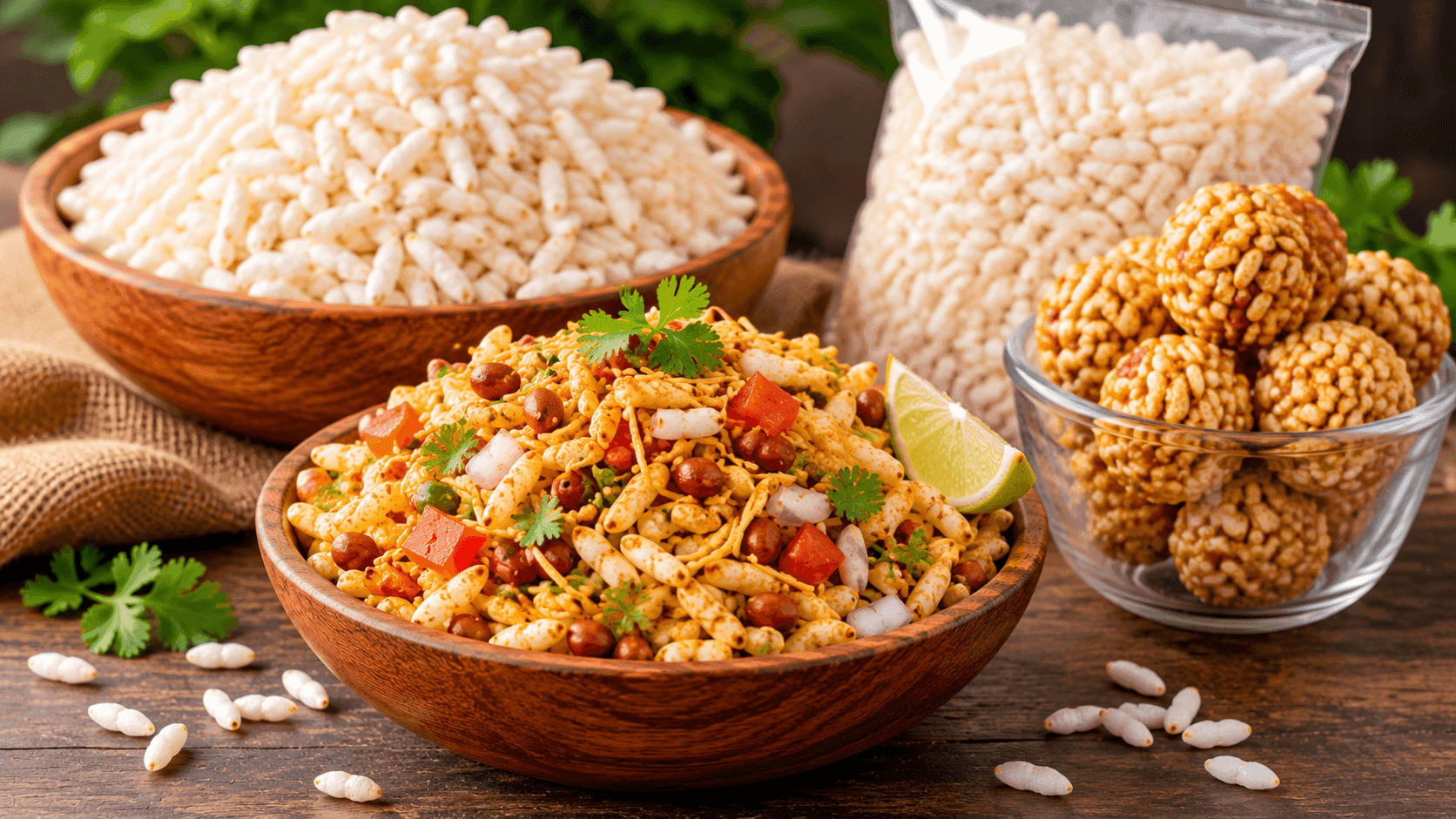
Murmura, also known as puffed rice, is a popular food product consumed across India. It is widely used in bhel puri, jhalmuri, namkeen, chikki and other traditional snacks.
A Murmura Making Business involves converting suitable rice into lightweight, crispy puffed rice through a controlled heating and puffing process.
Entrepreneurs can start this business on a small, medium or commercial scale depending on their investment, machinery and target market.
Regular Demand: Murmura is consumed in households and used by street food vendors.
Multiple Applications: It is used in namkeen, bhel puri, jhalmuri and packaged snacks.
Local Market Opportunity: Grocery shops, wholesalers and snack manufacturers are potential customers.
Product Diversification: You can introduce masala murmura, flavoured snacks and ready-to-eat mixtures.
Scalable Production: Production capacity can be increased as your customer base grows.
The quality of raw materials directly affects the puffing quality, texture and appearance of the final product.
| Raw Material | Purpose |
|---|---|
| Suitable rice or paddy | Main ingredient |
| Salt | Used for conditioning in certain processes |
| Water | Used for soaking and moisture conditioning |
| Food-grade packaging pouches | Packaging finished murmura |
| Labels and cartons | Branding and distribution |
Important: Not every rice variety produces good-quality murmura. Select suitable raw material according to your chosen puffing method and conduct production trials before bulk purchasing.
The manufacturing process depends on the selected production method. A traditional process generally involves the following stages.
Select suitable rice or paddy according to your production method. Remove dust, stones and other unwanted materials using cleaning equipment.
In traditional processing, rice may be soaked and conditioned with salt water to prepare it for puffing. The duration depends on the rice variety and production method.
Remove excess water and dry the conditioned rice to achieve the required moisture level.
The conditioned rice is exposed to high heat using a suitable puffing machine or roasting arrangement. The internal moisture creates steam, causing the rice to expand and become crispy.
Separate puffed rice from sand, husk, unpuffed grains and other unwanted particles using suitable sieving equipment.
Allow the finished murmura to cool before packaging.
Weigh the finished product according to the required pack size and pack it in suitable food-grade, moisture-resistant packaging.
Seal the packets properly and store them in a clean, dry place before distribution.
| Machine / Equipment | Purpose |
|---|---|
| Rice Cleaning Machine | Removes dust and impurities |
| Dehusking Machine | Removes husk when starting with paddy |
| Soaking Tank | Conditions rice before puffing |
| Dryer | Controls moisture before processing |
| Murmura Puffing Machine | Converts conditioned rice into puffed rice |
| Sieving Machine | Separates impurities and unpuffed grains |
| Weighing Machine | Measures product quantity |
| Pouch Packing Machine | Packs murmura into retail pouches |
| Sealing Machine | Seals packets securely |
Suitable for entrepreneurs entering the business.
Start with essential puffing, sieving, weighing and sealing equipment.
Purchase suitable processed rice from reliable suppliers.
Expand machinery as sales increase.
Suitable for larger production requirements.
May include cleaning, dehusking, soaking and drying equipment.
Provides greater control over raw material processing.
Requires more space, investment and working capital.
Machinery Buying Tip: Before purchasing, confirm the machine's actual production capacity, fuel consumption, power requirements and output quality. Ask the supplier for a live demonstration.
Machinery: Puffing machine, cleaning equipment, dryer, sieving and packaging machinery.
Infrastructure: Production area, electrical installation, ventilation and storage.
Raw Materials: Rice, salt and other required ingredients.
Packaging: Food-grade pouches, labels and cartons.
Labour: Workers for production, cleaning and packaging.
Working Capital: Electricity, fuel, transportation and maintenance.
Before starting a commercial murmura manufacturing unit, check the applicable registrations and local requirements. Important Registrations
FSSAI Registration or Licence: Required according to the applicable food-business category.
Udyam Registration: For MSME registration.
GST Registration: Required when applicable under GST rules.
Trade Licence: Check local municipal requirements.
Factory and Local Permissions: Depending on unit size and workforce.
Pollution and Fire Clearances: Depending on the production process and premises.
Always verify the latest requirements with the relevant government departments.
Murmura has multiple potential customer segments. You can begin with local buyers and gradually expand your distribution network.
Grocery Stores: Supply regular retail packs.
Wholesale Markets: Sell larger quantities to distributors.
Street Food Vendors: Supply murmura for bhel puri and jhalmuri.
Namkeen Manufacturers: Supply bulk quantities for snack production.
Supermarkets: Offer branded and packaged products.
Online Platforms: Sell packaged products through suitable e-commerce channels.
Visit local grocery shops and wholesale markets.
Offer product samples to potential buyers.
Maintain consistent puffing quality and crispness.
Provide different pack sizes.
Build relationships with distributors and snack manufacturers.
| Product | Target Customers |
|---|---|
| Plain Murmura | Grocery shops and households |
| Masala Murmura | Retail snack buyers |
| Spicy Murmura | Local snack markets |
| Bhel Puri Mixture | Street food vendors |
| Jhalmuri Mixture | Snack shops |
| Murmura Chikki | Sweet shops and snack brands |
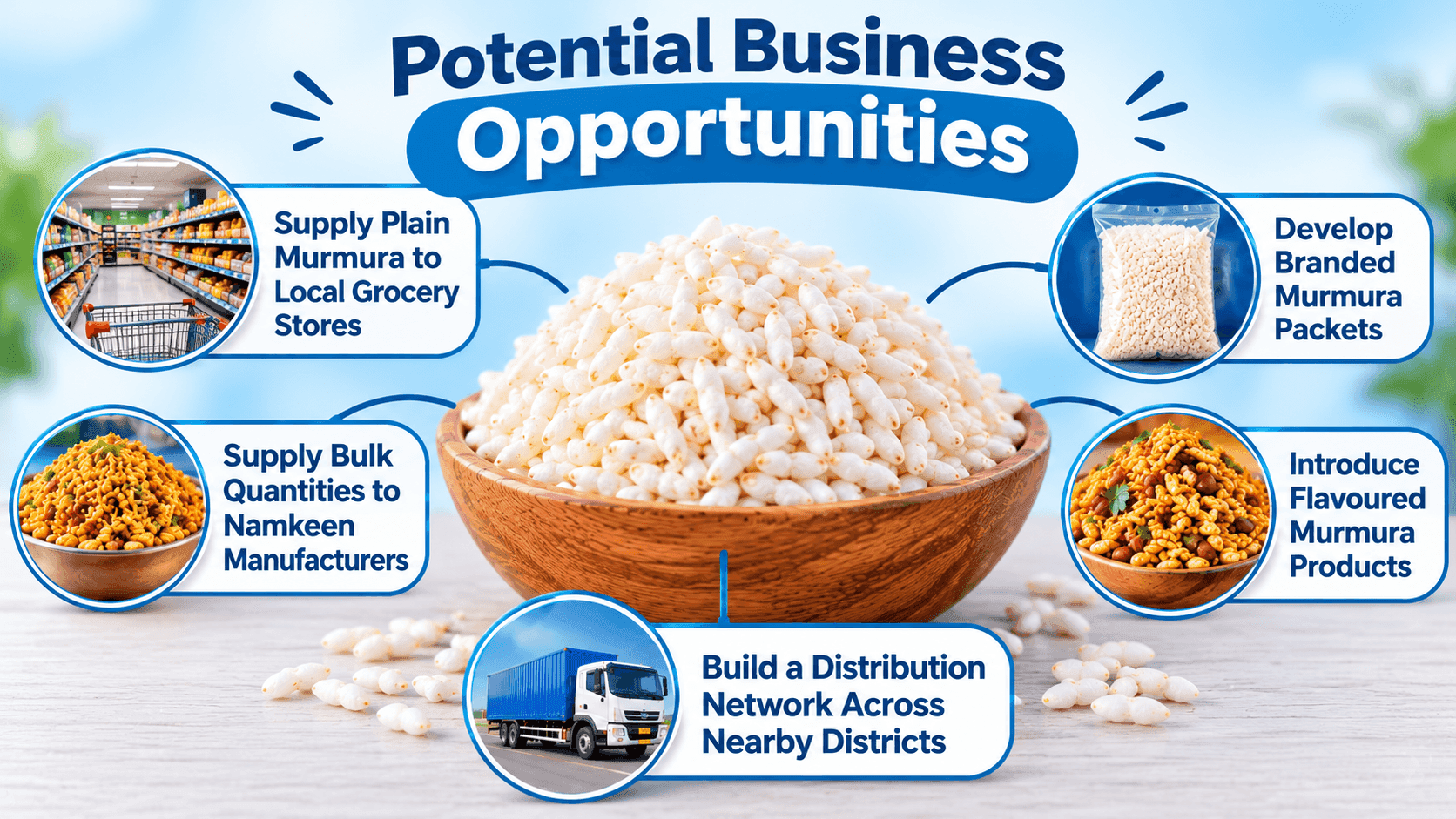
Bihar offers opportunities for small-scale food-processing businesses because murmura is commonly used in local snacks and household food preparations.
Entrepreneurs can explore markets in Patna, Muzaffarpur, Darbhanga, Gaya and Bhagalpur.
Supply plain murmura to local grocery stores.
Develop branded murmura packets.
Supply bulk quantities to namkeen manufacturers.
Introduce flavoured murmura products.
Build a distribution network across nearby districts.
Not every rice variety produces the same puffing quality. Test the raw material before bulk purchasing.
Incorrect moisture conditioning can affect puffing, texture and product quality.
Ask the supplier to demonstrate the machine using your intended raw material.
Calculate operating expenses along with the machinery purchase price.
Use suitable food-grade packaging and proper sealing to protect crispness.
Identify grocery shops, wholesalers and snack manufacturers before increasing production.

Starting a murmura manufacturing business requires the right machinery, production planning and a clear understanding of the market.
StartupHyper helps entrepreneurs explore suitable machinery solutions for small-scale manufacturing and food-processing businesses.
Machinery selection according to production requirements.
Guidance on production capacity and setup planning.
Machinery and supplier-related assistance.
Support in planning a manufacturing unit.
Sahi Machine, Sahi Shuruaat!
Visit https://www.machinehai.com/ to explore machinery solutions for your business.
It can be a viable food-processing business when raw material costs, production expenses, product quality and distribution are managed effectively.
Suitable rice varieties are selected according to the puffing method and desired product quality.
The main equipment includes a murmura puffing machine, cleaning and sieving equipment, weighing and packaging machinery.
Published project references range from an older KVIC estimate of ₹3.55 lakh to a NIFTEM model project of ₹21.52 lakh. Obtain current quotations before preparing your budget.
Namkeen manufacturers, wholesalers, grocery distributors and snack businesses are potential bulk buyers.
Yes. You can sell branded products through grocery shops, supermarkets, distributors and online channels, subject to applicable food safety and labelling requirements.
A Murmura Making Business can be an opportunity for entrepreneurs interested in food processing and packaged snack manufacturing.
The key is to select suitable rice, understand the puffing process, choose the right machinery and build a reliable customer network.
Start by studying local demand, testing raw materials and comparing machinery options. With consistent product quality, proper packaging and a well-planned distribution strategy, you can gradually expand your business.
1. Mini Rice Mill Business in Bihar 2026
2. Top 7 Food Processing Businesses in Bihar
3. How to Start a Food Processing Business in Bihar
📞Call / WhatsApp: 9472093913
📧Email: info@startuphyper.com
🌐 Website: www.startuphyper.com | www.machinehai.com
🏢 Branches: Patna | Gaya | Katihar | Saharsa

Nov 12, 2026
Stay updated with the latest tips, trends, and best practices in factory setup and machinery procurement—subscribe to the StartupHyper newsletter!
No spam, we promise. Your inbox is safe with us—only valuable insights.