Read the full article to gain deeper insights and comprehensive information.

Oct 28, 2026
0
Start a potato chips manufacturing business in 2026: machines and prices, step-by-step process, licences, PMFME subsidy and setup costs explained simply.
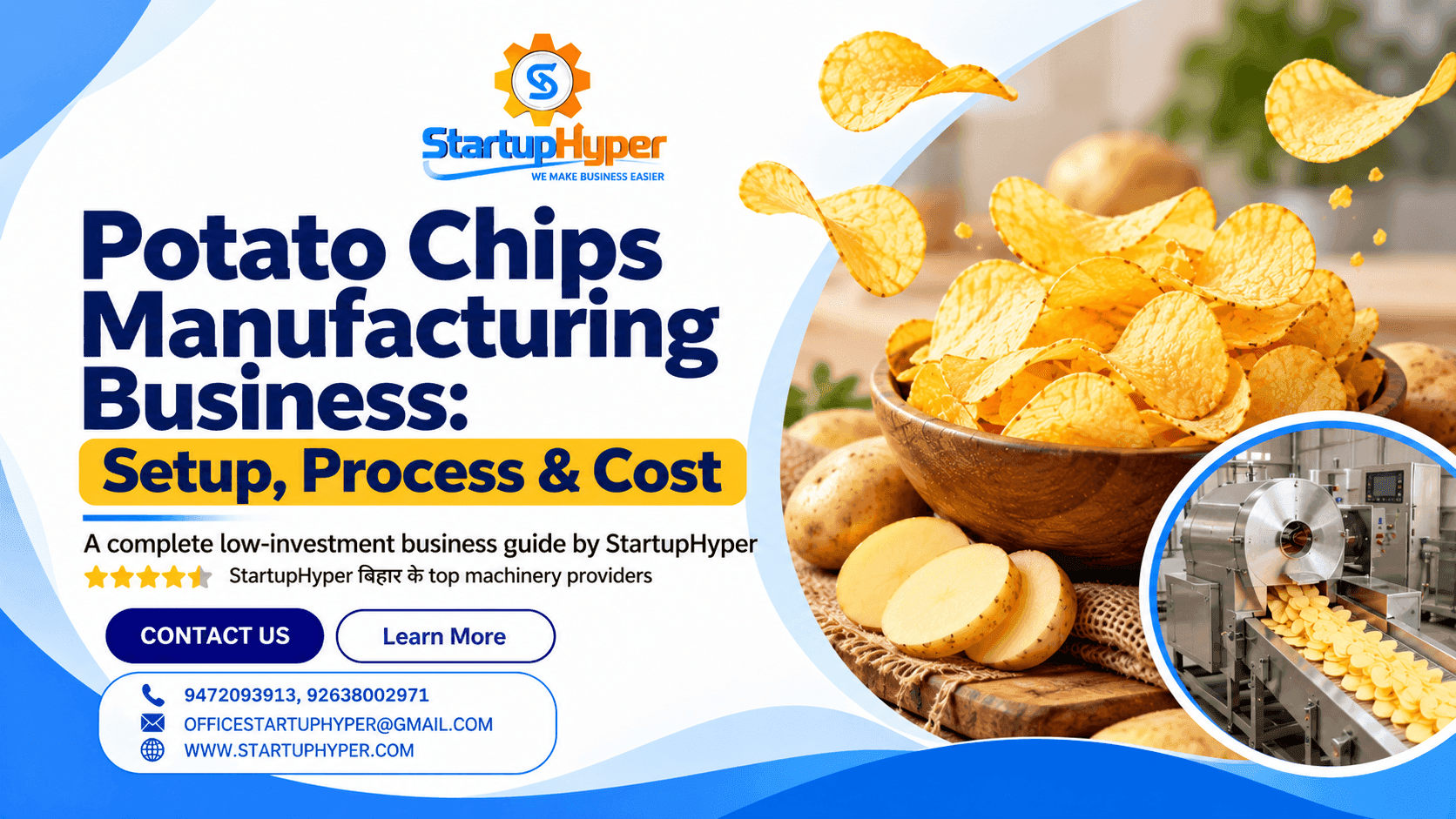
Potato chips sell in kirana shops, canteens, supermarkets and highway dhabas throughout the year. Starting a potato chips manufacturing business can be an opportunity for entrepreneurs who want to enter the food processing industry.
With the right machinery, quality raw materials and proper packaging, you can start a small batch-based unit and gradually expand your production capacity. This guide explains the manufacturing process, machine prices, setup costs, licences, government schemes and important tips for starting a potato chips business in India.
Potato chips are a popular snack consumed by people of different age groups. Their demand across local markets and retail outlets creates opportunities for small and medium-sized food businesses.
Here are some reasons to consider this business:
Regular market demand: Potato chips are sold in kirana shops, canteens, supermarkets and local snack stores.
Easy availability of raw materials: Potatoes and other essential ingredients are available through agricultural markets and suppliers.
Scope for local branding: You can introduce regional flavours, affordable packaging and locally preferred products.
Flexible production capacity: You can begin with a small batch unit and expand as demand grows.
Food processing opportunities: Eligible micro food processing businesses may explore applicable government support schemes.
Selecting good-quality potatoes is essential for producing crispy, evenly coloured chips. Potatoes with high dry matter and suitable sugar levels generally produce better frying results.
Processing varieties such as Kufri Chipsona may be considered, depending on availability and suitability for your production process.
Learn more through the ICAR-CPRI processing varieties resource.
The main raw materials required are:
Fresh, good-quality potatoes
Refined edible oil
Salt and seasoning ingredients
Spices and flavouring mixtures
Food-grade laminated packaging pouches
Nitrogen gas, if nitrogen-flush packaging is used
Before purchasing potatoes in bulk, test a sample batch to check colour, crispness, oil absorption and final product quality.
The potato chips manufacturing process involves several steps, from cleaning the potatoes to packing the finished product.
Remove rotten, green, damaged or sprouted potatoes. Sorting helps maintain consistent product quality and reduces wastage during processing.
Wash the potatoes thoroughly to remove soil and dirt. Use a suitable potato peeler to remove the outer skin efficiently.
Use a potato slicer to cut the potatoes into thin, uniform slices. Consistent thickness helps the chips cook evenly.
Wash the sliced potatoes to remove excess surface starch. This helps reduce sticking and supports consistent frying.
Use a suitable dewatering system or centrifugal dryer to remove excess water from the slices before frying.
Fry the slices in a suitable fryer at a controlled temperature until they reach the desired crispness and colour. Monitor the frying oil regularly to maintain product quality.
Remove excess oil using a suitable de-oiling machine, where required. Add salt or seasoning in a flavouring drum to distribute the flavour evenly.
Allow the chips to cool appropriately before packaging. Use food-grade, moisture-resistant pouches and suitable sealing equipment. Nitrogen-flush packaging can help protect product quality and extend shelf life when combined with appropriate packaging materials and storage conditions.
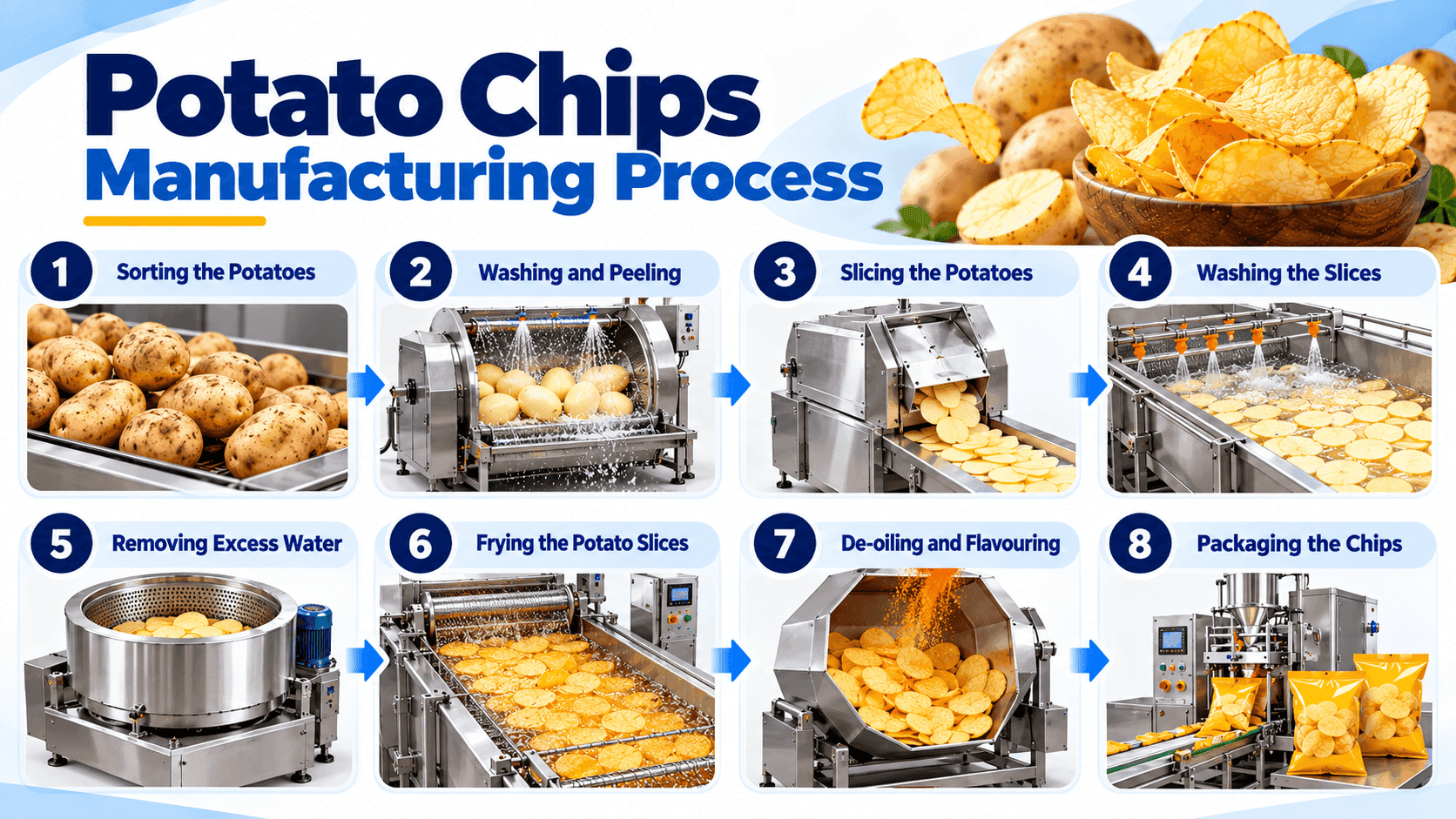
The machinery required depends on your production capacity, level of automation and budget. A small unit may use separate machines, while a larger facility may require an integrated production line.
A potato slicer cuts potatoes into uniform slices before frying.
Approximate listed price: ₹34,500–₹35,000
Example capacity: 25–30 kg per hour
Main use: Slicing potatoes uniformly
A batch fryer is used to fry potato slices until they become crispy.
Approximate listed price: ₹2.5 lakh
Main use: Frying potato slices
Important considerations: Heating system, oil capacity, temperature control and material quality
This equipment seals packaging pouches and can flush nitrogen into suitable packs before sealing.
Approximate listed price: ₹35,000–₹42,500
Main use: Packaging and sealing chips
Important considerations: Pouch compatibility, sealing quality and nitrogen-flushing capability
These machines support potato preparation and finishing.
Price: Obtain quotations based on capacity and specifications.
Main use: Peeling potatoes, removing excess water and reducing excess oil from fried chips.
A flavouring drum helps distribute salt and seasoning evenly over the finished chips.
Price: Depends on capacity, construction and automation.
Main use: Mixing seasonings with chips.
A semi-automatic production line can combine several processing stages and reduce manual work.
A machine listing has advertised a potato chips line of approximately 50 kg per hour at around ₹10.5 lakh. Treat this as an indicative seller-listed price, not a confirmed current quotation.
You can review the semi-automatic potato chips machine listing.
Before purchasing, compare at least two or three suppliers. Confirm the actual output capacity, included machines, installation charges, warranty, power requirements and after-sales service.
The total investment depends on the scale of production, building requirements, machinery, utilities, packaging and working capital.
Your project budget may include:
Machinery and installation
Factory space and civil work
Electricity connection and wiring
Water supply and drainage
Initial stock of potatoes, oil and seasonings
Packaging materials
Labour and operating expenses
Licences, testing and compliance
Transportation, distribution and marketing
Working capital for the initial months
A small unit may use separate machines for slicing, frying, de-oiling, flavouring and packaging. The total investment depends on the equipment selected, production target and facility requirements.
A semi-automatic unit can offer higher output and more consistent processing. The investment depends on the actual line configuration, installation and supporting infrastructure.
A fully automatic plant may include continuous frying, conveying, seasoning and automated packaging systems. Such a facility requires a detailed project report and supplier quotations.
Important: Total plant costs vary significantly between suppliers and production capacities. Do not treat broad estimates as confirmed investment figures. Obtain a detailed quotation and calculate the working capital requirement before finalising your budget.
You can review this potato chips plant cost resource for additional planning information.
Before starting commercial production, check the registrations and approvals applicable to your business and location.
FSSAI registration or licence: Food businesses must obtain the applicable food safety registration or licence. Check requirements through the official FSSAI FoSCoS portal.
Udyam registration: Eligible MSMEs can register through the official Udyam registration portal.
GST registration: Registration requirements depend on applicable turnover thresholds, business activities and other legal conditions.
Local trade permissions: Check applicable municipal and local authority requirements.
Fire and factory approvals: These may be required depending on the premises, machinery, workforce and applicable regulations.
Food labelling compliance: Packaged products must follow applicable labelling requirements, including declarations such as ingredients, net quantity, manufacturer details, batch information, applicable dates, MRP and FSSAI details.
Consult the relevant authorities or a qualified professional to confirm the requirements for your particular unit.

Starting a food processing business involves more than purchasing machinery. You also need to select suitable equipment, plan production capacity and understand the investment involved.
StartupHyper can be approached for relevant machinery and business setup support, depending on the services currently available.
Machine selection: Identifying suitable machinery for your production requirements.
Project planning: Estimating machinery needs and preparing a business setup plan.
Supplier coordination: Comparing machine specifications and quotations.
Business setup guidance: Understanding relevant registrations and operational requirements.
Funding guidance: Exploring applicable loan and subsidy schemes.
Planning to start a potato chips manufacturing business? Contact StartupHyper to discuss your machinery requirements and project plans.
Begin with a manageable range, such as salted, masala and other locally preferred flavours. Test customer demand before expanding your product range.
Maintain uniform slice thickness, controlled frying conditions and consistent seasoning. Test batches regularly to maintain taste and crispness.
Approach kirana shops, canteens, snack stores, wholesalers and distributors. Start with a defined market area and expand as repeat orders increase.
Check potato quality before purchasing in bulk. Poor storage conditions and unsuitable potatoes can affect colour, taste and processing yield.
Monitor frying oil quality, maintain hygienic processing conditions and follow applicable food safety requirements.
Use food-grade packaging that protects the chips from moisture and damage. Select sealing equipment according to your pouch material and production volume.
Estimate raw material costs, oil consumption, processing yield, labour, packaging, electricity, transport and retailer margins. Conduct a small production trial before committing to large-scale investment.
The investment depends on production capacity, machinery, premises, packaging equipment and working capital. A small batch-based unit can cost substantially less than a large automated plant. Obtain quotations and prepare a detailed project budget before investing.
Indicative listings in this guide include potato slicers at around ₹34,500–₹35,000, batch fryers at around ₹2.5 lakh and a semi-automatic line at around ₹10.5 lakh. Prices vary by supplier, capacity, specifications and installation requirements.
Processing varieties with suitable dry matter and sugar levels are generally preferred. Kufri Chipsona is one variety to investigate, but suitability should be confirmed through sample frying tests and local availability.
Food businesses must obtain the applicable FSSAI registration or licence before conducting regulated food business activities. The category depends on the business and its scale.
Eligible micro food processing enterprises may qualify for assistance under applicable government schemes. Check current PMFME guidelines, application availability and project eligibility before relying on a subsidy.
Common equipment includes a potato washer or peeler, slicer, fryer, dewatering equipment, de-oiling centrifuge, flavouring drum and packaging machine. The exact requirements depend on the production process and scale.
You can approach kirana shops, canteens, snack stores, wholesalers and distributors. Product quality, competitive pricing, attractive packaging and reliable supply are important for building repeat orders.
Turn your business idea into reality with StartupHyper! Get guidance on selecting the right machinery, planning your setup, and exploring funding opportunities for your food processing business.
📞Call / WhatsApp: 9472093913
📧Email: info@startuphyper.com
🌐 Website: www.startuphyper.com | www.machinehai.com
🏢 Branches: Patna | Gaya | Katihar | Saharsa
Stay updated with the latest tips, trends, and best practices in factory setup and machinery procurement—subscribe to the StartupHyper newsletter!
No spam, we promise. Your inbox is safe with us—only valuable insights.